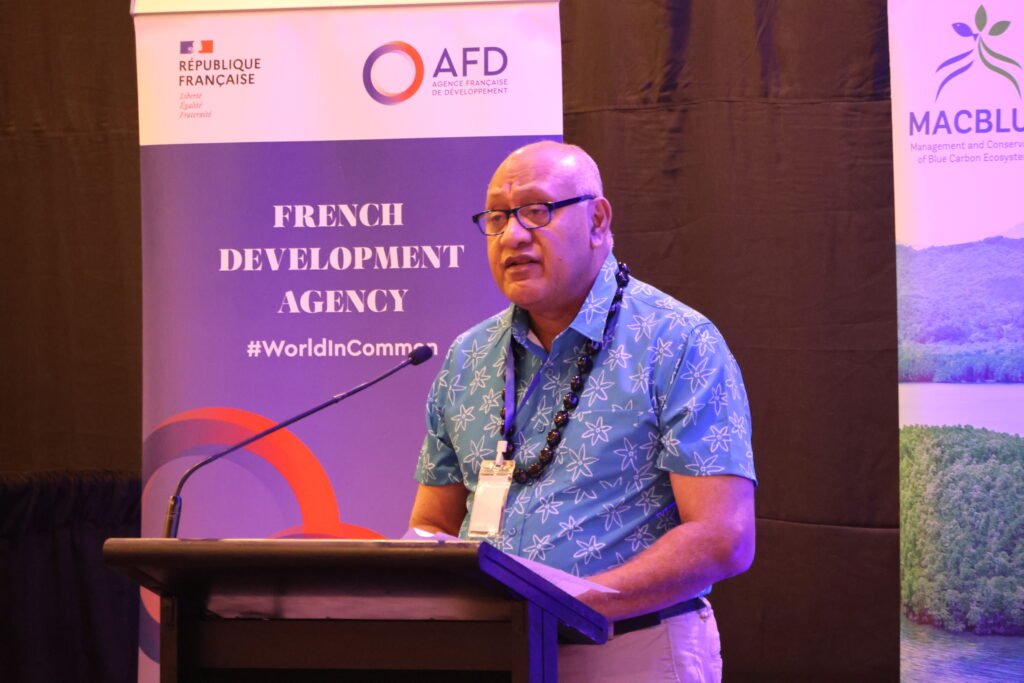
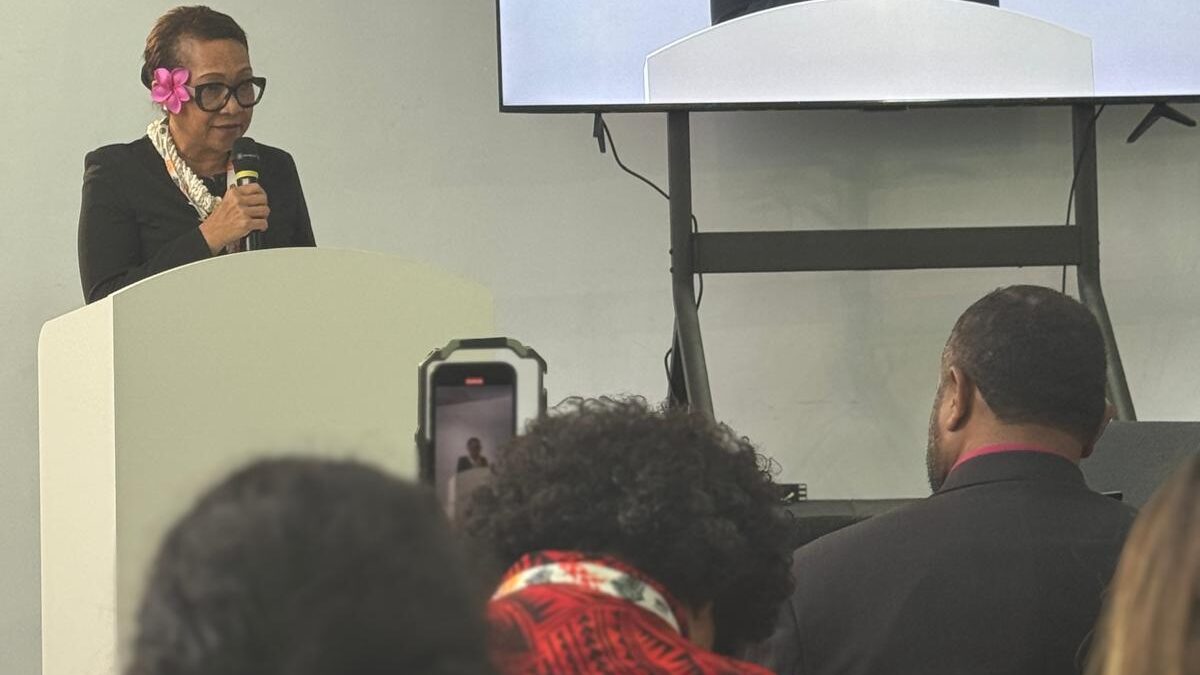
I have the honour to speak on behalf of the Pacific Small Island Developing States in my capacity as the Pacific political champion for ocean and climate change. We associate ourselves with the statement made by Fiji on behalf of AOSIS. I will briefly address the three guiding questions that have been presented to us.
- What could be possible outcomes for the ocean at COP30?
It is important that the recommendations from the ocean dialogue report become part of the decisions from COP. As alluded to by Fiji we are engaging closely with our thematic coordinators to ensure that this becomes a reality. We must also take stock of the work achieved to date under the ocean dialogue which has enhanced understanding, promoted cooperation, and provided a platform for sharing experiences and lessons across regions. . This necessitates that we consider the future of ocean and climate change work in the UNFCCC process to ensure that it is fully integrated across workstreams. The ocean is not only essential for life below water but is the foundation for life above it. Its inclusion under the Paris Agreement must be just, inclusive, and equitable, reflecting the perspectives of all ocean-dependent peoples. For Pacific SIDS, healthy marine ecosystems – underpinned by sustainable fisheries – are critical to livelihoods and economies, and integral to ensuring a healthy ocean.
For the Pacific, this also means recognising the role of local communities and the wealth of traditional knowledge that has sustained our ocean ecosystems for generations. Such wisdom offers invaluable guidance for adaptation, conservation, and restoration efforts, and must be respected and integrated alongside science in the global response.
- How can Parties strengthen ocean-based climate ambition through their new NDCs and NAPs?
Many Pacific countries have already included ocean-based actions in their new NDCs and NAPs, in, and have identified ocean energy opportunities, as well as adaptation actions, such as sustainable fisheries and blue food systems, many of which have mitigation co-benefits. We encourage other Parties to draw from these experiences and to explore how ocean-based climate actions can enhance ambition while supporting communities and biodiversity. Knowledge exchange including through the Mitigation Work Programme and other relevant processes can help amplify innovative, community-led solutions that combine modern science with traditional management practices. For the Pacific, healthy oceans and sustainable fisheries are inseparable – one cannot exist without the other, and climate change will impact the entire system.
- What enabling conditions are needed to strengthen and sustain the implementation of ocean–based climate actions?
The Pacific is constrained in accessing financial resources for all climate change action, due to our small size, limited resources and capacity, geographical distance and dispersion, and the relatively high transaction costs. Despite the recognition of SIDS’ special circumstances in multiple international declarations and UN resolutions, there remains a gap in operationalising this recognition into tangible support.
For many Pacific countries, ocean-based actions are central to our resilience and sustainable development. They have the potential to protect and sustain island resilience and also to make many SIDS renewable energy exporters. However, these opportunities cannot be realised without equitable access to finance and technology. .
We therefore call for financing arrangements that are accessible, predictable, and responsive to the realities of SIDS including support for locally led initiatives and recognition of traditional governance systems that underpin effective marine stewardship. Only then can our high ambition translate into meaningful implementation.
Let COP30 be the moment we secure its rightful place within the UNFCCC, not as an afterthought, but as a central pillar of climate ambition, guided by science, community wisdom, and collective will.
Thank you.