Title of Panel: “Shaping our blue future: integrative research to harness marine ecosystems for climate action around the world”
Monday 17 November 2025, 14:30 – 16:00 (BRT)
Distinguished Guests,
Ladies and Gentlemen,
Alii, good morning and very warm Pacific greetings to you all.
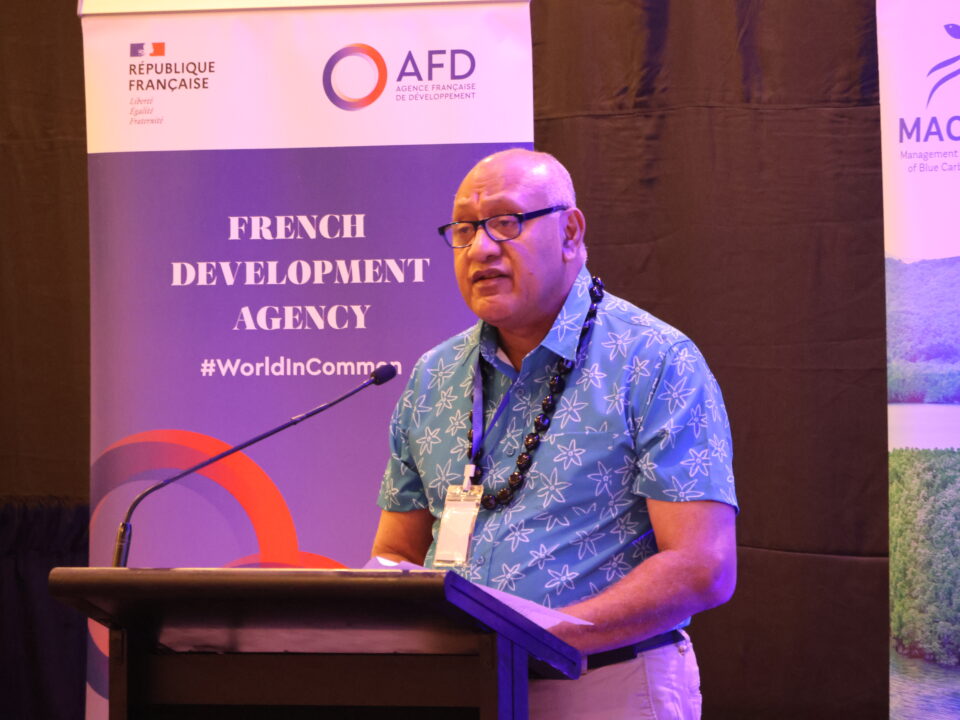
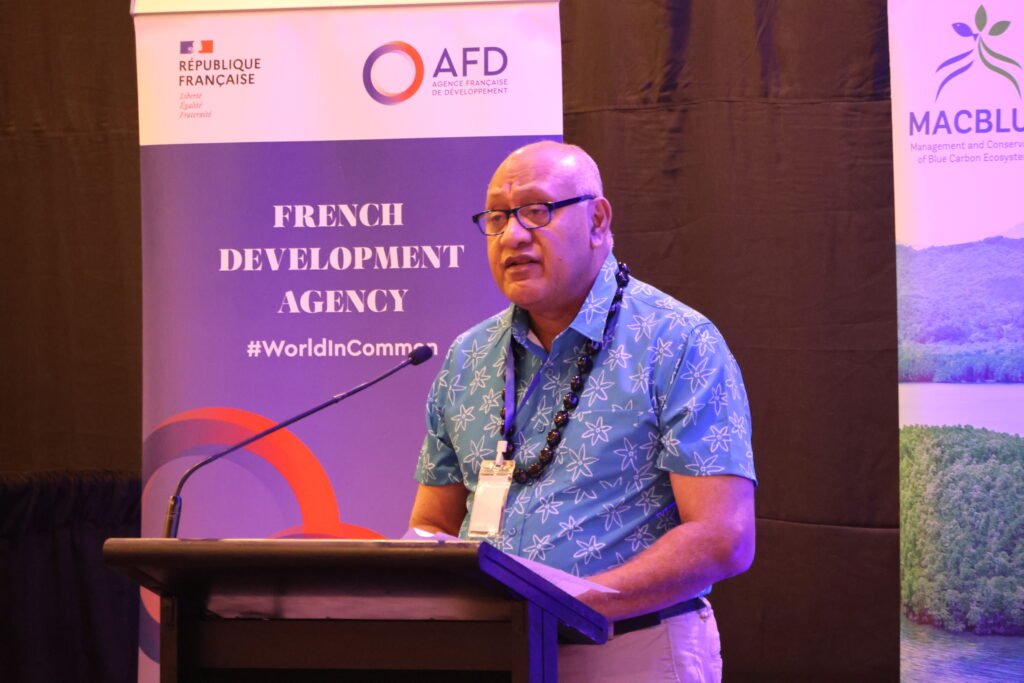
It is an honour to join you today for this event
I thank the organisers for inviting me to represent the Pacific Region at this event.
Unlike my other esteemed panellist, I am not a scientist. But I hope my presence here today may play some role in bridging the science to policy gap.
My role as the Pacific Ocean Commissioner is to bring necessary high-level representation and dedicated advocacy to ocean priorities and initiatives at the national, regional, and global levels, advocating for the secure future of Pacific people based on the sustainable development, management and conservation of the Pacific Ocean and its resources.
Me and my team, alongside other regional institutes of the Pacific work with Pacific Small Islands Developing States to support one collective voice at multilateral forums such as this climate process. We also work directly with our member countries to support regional and national ocean governance.
As large oceanic countries and territories, Pacific Island States are the custodians of nearly 20 percent of the earth’s surface, and we place great cultural and spiritual value on our ocean, as our common heritage. The ocean is vital for our very own existence.
We now know we have crossed a planetary boundary when it comes to ocean acidification. This poses risks to ecosystems, food security and economies. The true extent and scale of this is still to be understood.
To have one voice at places such as COP and to strengthen regional and national ocean governance, we must have the best available science and traditional knowledge at our fingertips, so that we may understand what we are up against and where we are heading. This will help us to make the policy decisions we need for the future we want for our children and grandchildren.
In terms of policy, I wish to highlight that our Region is guided by the 2050 Strategy for the Blue Pacific.
Pacific Island Countries faces an extraordinary imbalance between ocean management responsibilities and scientific capacity, with Pacific Island Countries serving as custodians of 20% of global Exclusive Economic Zones (EEZs) with only a fraction of the world population (0,15%) and GDP (0.04 %), creating unprecedented challenges for monitoring and management. These ocean spaces exceed land area by an average factor of 300 to 1.
Scientific and technological capacity remains severely limited across the region, with critical shortages in offshore research vessels, sampling equipment, laboratory facilities, and information technology infrastructure. This challenge is compounded by research agendas often being determined by external funders and researchers, potentially misaligning with local priorities and needs.
The region’s vast geography presents significant data management challenges, particularly in disseminating ocean information to isolated communities. Modern oceanographic datasets, with their increasing spatial and temporal resolution, frequently exceed local internet bandwidth capabilities. The South-West Pacific deep sea remains one of the world’s most under-sampled oceanic regions, creating significant knowledge gaps in deep-sea biodiversity understanding.
Traditional knowledge systems, while containing sophisticated understanding of ocean systems developed over generations, face integration challenges with modern scientific approaches. Pacific communities possess detailed knowledge of species migrations, reef health indicators, and weather patterns, yet formal mechanisms for incorporating this knowledge into scientific research and policy frameworks remain underdeveloped.
The science-policy interface faces challenges in data accessibility and communication. Decision-makers often lack access to timely scientific data in accessible formats, while researchers struggle to align their work with policy needs. This disconnect is further complicated by limited translation of scientific findings into local languages and culturally appropriate formats.
International cooperation, occurring at both global and regional levels, remains critical for resource allocation, coordination of efforts, and technology transfer. However, research capacity limitations and funding discontinuity affect the maintenance of long-term monitoring and research programs. The transformation of data to information and knowledge to policy involves multiple disciplines, requiring integrated approaches to science communication, social science, user-centred design, and policy development.
While these gaps exist – I wish to highlight some of the excellent work being undertaken in our region to bridge the gap. Work that must continue to be funded and supported. Our primary scientific and technical agency of the Pacific, the Pacific Community leads much of the regional work to address information gaps:
- The Pacific Islands Ocean Acidification Centre (PIOAC) serves as a hub for capacity building, training and knowledge exchange. It provides technical support and access to monitoring equipment for Pacific islands scientists and stakeholders. Partnership and collaboration is the main stronghold of the PIOAC – data collected must be shared. There is a need to also focus on sensor repair and maintenance support
- Pacific Ocean Portal Version 2.0, is a modernised, cloud-hosted, containerised platform that provides real-time, forecast, and historical ocean data to support decision-making and regional collaboration. Data types include; Real-time tide, sea level, wave, weather, chlorophyll, coral bleaching alerts, salinity, SST.
- Digital Earth Pacific (DEP), a cloud-based earth and marine observation platform that monitors blue carbon ecosystems (mangroves and seagrasses) across Pacific Island Countries. DEP transforms satellite imagery into user-friendly, standardized, and regionally consistent products to support climate resilience, biodiversity conservation, and sustainable livelihoods.
- In the region have a Pacific Islands Global Ocean Observation System, which is a partnership between SPC, CSIRO Australia and Earth Sciences NZ. Together they conduct a range of research and ocean observations, including: tracing deep water ocean circulation; monitoring ocean carbon change; and genomic analyses to advance understanding of microbial biodiversity under oceanographic conditions.
- Ocean monitoring is being enhanced through the “Ships of Opportunity” programme under SPC’s Fishing Vessel Observing Network (FVON). Participating tuna fishing vessels are equipped with instruments to enable monitoring of oceanic variables such as subsurface temperature, surface currents and pelagic prey, temperature and depth profiles.
Finally I wish to speak particularly on one topic that remains critical to our climate resilience. Tuna fisheries:
- Over half of the world’s tuna comes from the exclusive economic zones of Pacific island countries.
- The value of tuna caught in our waters is estimated at over USD 26 billion annually, with about USD 7 billion in direct revenue to Pacific SIDS.
- Our primary scientific and technical agency of the Pacific, the Pacific Community is leading work to address information gaps on the effect of climate change on tuna fisheries. This then informs fisheries management, led by the Pacific Islands Forum Fisheries Agency.
- Later today at 4.30-5.15 at the Moana Pavilion there will be an official launch of the most comprehensive scientific assessment of how climate change is impacting fisheries and aquaculture across the Pacific Region. I invite you all to join to hear and learn more.
I wish to end by echoing the call made by our Pacific Region at UNOC3 earlier this year in Nice.
The Pacific region calls for a transformative step forward in ocean-related scientific cooperation, aiming to build a resilient, inclusive, and innovation-driven ‘Blue Pacific Research Ecosystem’ that strengthens science-policy interfaces, valorizes traditional knowledge, and fosters regional ownership of marine technologies and education.
The region calls on the international community to mobilize support to develop ocean science capacity in and with the Pacific.
I thank you